



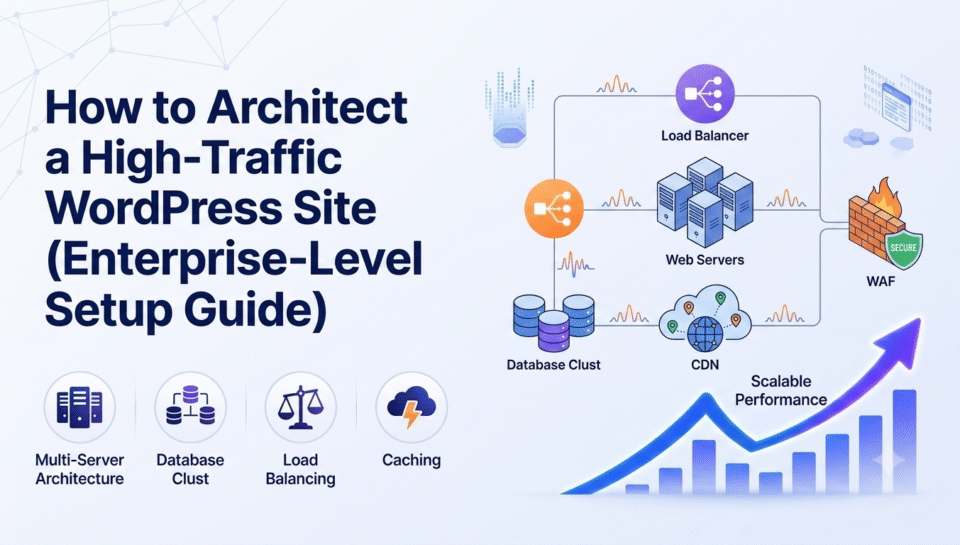
How to Architect a High-Traffic WordPress Site (Enterprise-Level Setup Guide)
Building a website that handles millions of visitors requires a fundamental shift from standard setups to high-performance architecture. When thousands of people click your links at once, a basic server will stall because it cannot isolate resources for such intense data processing. Moving to enterprise WordPress hosting India solves this issue by providing local server proximity and hardware that stays responsive under pressure. This shift ensures your website scales alongside your traffic, preventing server limitations from slowing down your business momentum.
Maintaining stability depends on how you structure your database and caching layers to keep the server from running out of resources. Poorly tuned backends cause most business crashes, as they cannot process hundreds of concurrent PHP executions or complex database queries. Running your website on high traffic WordPress hosting provides a backend environment fine-tuned for the specific way the WordPress core handles data requests. Smart technical planning removes the threat of downtime, making sure every visitor enjoys a smooth journey even during your peak sales windows.
Eliminating the Single Point of Failure
Putting all your digital assets on one physical server is a risky move for any growing company. High-volume platforms require a distributed network where traffic spreads across several interconnected nodes. If one machine hits a limit or glitches, the rest of the cluster picks up the slack without the user ever noticing. This horizontal scaling model lets you add power during a viral product launch or a major marketing event. It keeps your operational expenses low during quiet hours while giving you the capacity to expand the moment your traffic numbers climb.
Real-Time Memory Optimization
Front-end design gets the attention, but your data request handling determines the actual speed. Redis stores your most requested data in RAM rather than on the disk, removing the delay of reading from a hard drive. This setup means the server avoids the slow process of searching through hard drives every time a page loads. Users get an interface that reacts instantly to every click.
Offloading the Origin Server
Your central server should spend its energy generating dynamic content, not serving heavy media files or static scripts. Passing these tasks to a global delivery network ensures that a visitor in Mumbai or New York pulls data from a local edge server instead of your main data center. By switching to modern image formats like WebP, you can reduce file weights significantly without sacrificing visual sharpness. This level of optimization ensures the website remains usable for mobile visitors on weak signals, keeping your engagement rates high and your bounce rates low.
Building with High-End Resources
Handling a massive digital footprint is a technical challenge, but the right infrastructure makes the process manageable for your internal team. MilesWeb delivers a high-performance environment by tuning hardware specifically for demanding enterprise applications. Investing in high-performance hardware eliminates the usual infrastructure issues. It clears your schedule for strategy because the server stays up and runs exactly as it should. MilesWeb supports this environment with free professional email accounts and daily backups. These features protect your business data and team communications against unexpected technical errors.
Proactive Infrastructure Oversight
You cannot improve what you aren’t tracking, especially when your traffic volume is high. Real-time monitoring gives your technical staff a clear view of how much CPU and memory your website consumes at any given second. Early trend detection lets you adjust resources before they become a problem, rather than struggling to fix a crash.
Hardening the Database Layer
As your website scales, the database is usually where things start to slow down. Eliminating table overhead and optimizing your SQL ensures queries snap back in milliseconds. When you implement smart indexing and query caching, you reduce the load from the CPU, which means your current hardware can actually handle a lot more traffic. This layer of the stack is the foundation of your entire user experience, so keeping it lean is vital for maintaining a professional image. A clean database translates directly into faster checkout times and more successful conversions for your brand.
Global Connectivity and Latency Reduction
Server location dictates how fast your website feels to a visitor. Storing data in regional data centers shortens the physical route for every packet of info. This reduces the lag that makes search bars and forms feel sluggish. Instant responses make your website feel professional, while speed proves your brand operates with technical precision.
Concluding Insights
Success at the enterprise level is the result of deliberate engineering rather than luck. By focusing on node distribution, smart memory management, and high-impact asset optimization, you build a digital presence that stays fast regardless of how many people arrive.
MilesWeb provides the hardware stability and professional features needed to keep these advanced configurations running at peak efficiency. This commitment to technical excellence ensures your brand is ready for any challenge the market brings.
Your digital foundation is now a competitive advantage that supports your long-term vision with total reliability. Maintaining a current infrastructure ensures you never fall behind competitors in speed or security.